Breathing Meditation for Spinal Health: Align Your Posture and Nervous System Through Spine-Aware Breathwork
Learn to channel breath awareness along your spine to simultaneously improve posture and regulate your autonomic nervous system with this spine-focused breathing meditation.
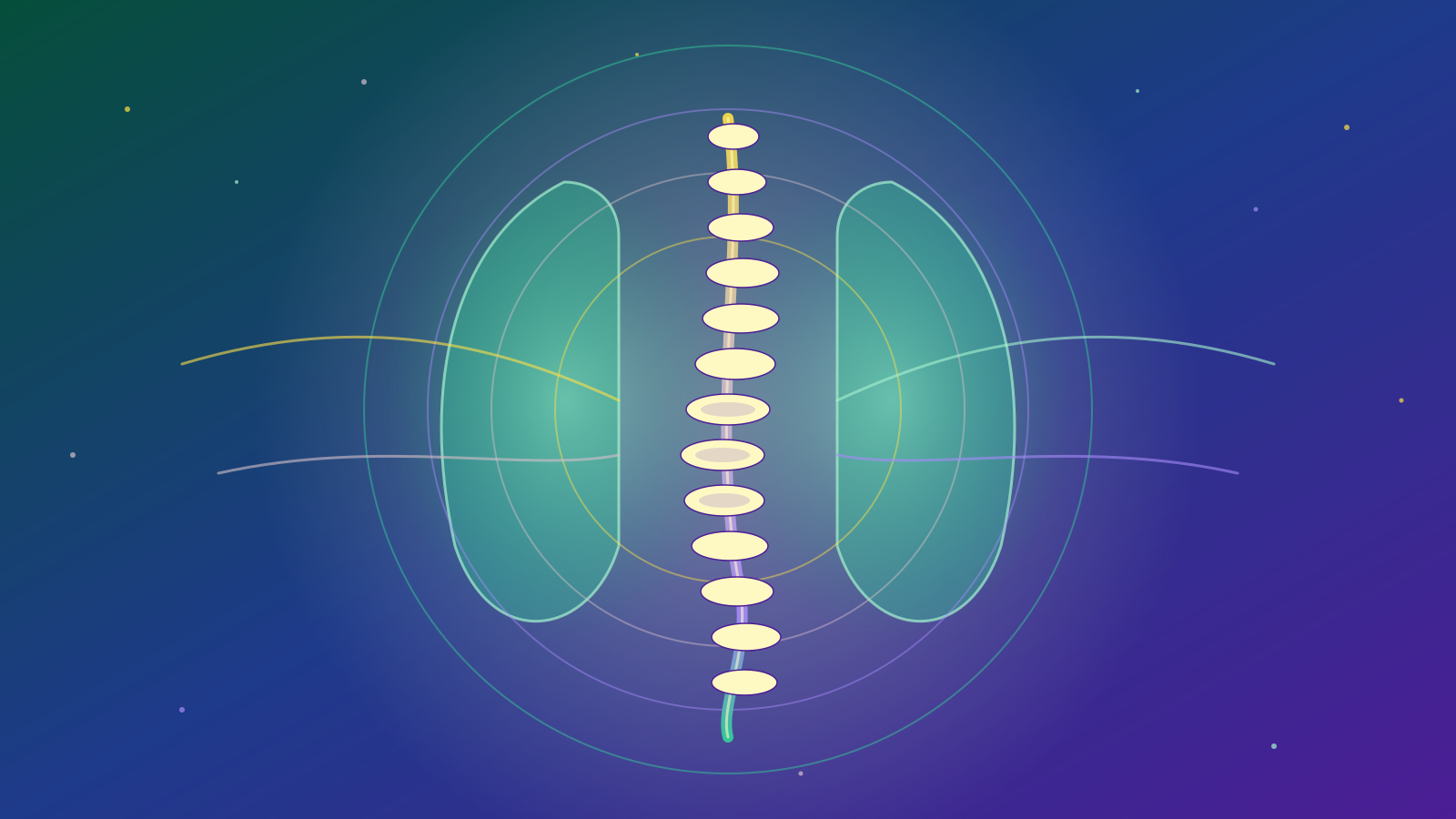
The Deep Connection Between Spine and Breath: An Anatomical Perspective
The spine consists of an intricate structure: seven cervical vertebrae, twelve thoracic vertebrae, five lumbar vertebrae, the sacrum, and the coccyx. These 26 bones are linked by intervertebral discs and ligaments, supporting the trunk while protecting the spinal cord—the central nervous system's primary conduit. The diaphragm, essential for breathing, attaches near the twelfth thoracic vertebra, while intercostal muscles connect at each thoracic level. In other words, breathing and the spinal column are anatomically inseparable.
When you breathe deeply, the diaphragm descends substantially, causing the entire spine to extend subtly. Shallow breathing, conversely, restricts diaphragmatic movement and tends to compress the spine. A 2019 study by researchers at the University of California found that participants who practiced conscious deep breathing for fifteen minutes daily over eight weeks improved their spinal range of motion by an average of twelve percent.
Furthermore, the sympathetic trunk of the autonomic nervous system runs along both sides of the spine. When the spine becomes misaligned, this nerve trunk can be physically compressed, triggering sympathetic hyperactivity—a finding confirmed by multiple studies. Poor posture is therefore not merely an aesthetic concern; it disrupts autonomic balance and creates chronic stress. In the yogic tradition, prana (life energy) is believed to flow along the spine, making it central to meditation. Modern science similarly confirms that proper muscle tension balance around the spine and healthy cerebrospinal fluid circulation are essential for overall wellbeing.
The Scientific Mechanisms Behind Spinal Breathing Meditation
Understanding why spine-focused breathing meditation works can strengthen your motivation to practice. The first mechanism involves cerebrospinal fluid circulation. Cerebrospinal fluid is the clear liquid surrounding the brain and spinal cord, responsible for removing waste products and delivering nutrients. The subtle expansion and contraction of the spine during breathing acts as a pump for this fluid. Dr. John Upledger, a pioneer in craniosacral therapy research, proposed that when breathing rhythm synchronizes with cerebrospinal fluid pulsation, the entire central nervous system functions more optimally.
The second mechanism involves vagus nerve stimulation. The vagus nerve originates in the brainstem, descends through the neck, and branches extensively throughout the thoracic and abdominal organs as the primary parasympathetic pathway. Slow, deep breathing activates the vagus nerve, lowering heart rate, promoting digestion, and guiding the body toward relaxation. Some research suggests that maintaining spinal awareness during breathing optimizes physical stimulation of the vagus nerve, particularly in the cervical-to-thoracic region.
The third mechanism is proprioceptive activation. Countless proprioceptors—sensors that detect position and movement—surround the spine. When you breathe with spinal awareness, these sensors send rich information to the brain, enabling precise updates to your body map. The result is improved postural control and the release of unnecessary muscle tension.
How to Practice Spinal Breathing Meditation
Basic Spinal Breathing (10 minutes)
Sit in a chair or cross-legged on the floor. Begin by distributing your weight evenly on your sitting bones (the bony prominences on either side of your pelvis) to stabilize your pelvis. Bring awareness to your coccyx, then imagine your spine extending upward like a flexible rod to the crown of your head.
On the inhale (taking four seconds), visualize energy rising along the spine like warm light from coccyx to crown. On the exhale (taking six seconds), visualize it descending gently from crown back to coccyx. The four-to-six inhale-to-exhale ratio promotes parasympathetic dominance, enhancing the relaxation response.
Tune into the actual subtle movements of your spine with each breath. On inhalation, the spine naturally extends slightly; on exhalation, it subtly flexes. Noticing these micro-movements gently activates the deep stabilizing muscles—the multifidus and other core muscles—naturally building postural strength. Spend the first three minutes focusing on sensing movement, then integrate visualization with physical sensation for the remaining seven minutes.
Vertebra Relay Breathing (15 minutes)
For deeper practice, move your awareness through each spinal level sequentially. Starting from the coccyx, progress through the sacrum, five lumbar vertebrae, twelve thoracic vertebrae, seven cervical vertebrae, and finally the base of the skull—ascending one level with each breath. When your awareness reaches a vertebra where you detect tension or blockage, send an image of release with your exhale. After reaching the skull base, reverse direction and descend.
This practice takes approximately fifty breaths for a complete round trip. Precisely scanning the entire spine reveals and resolves tension patterns you normally overlook. Desk workers typically accumulate tension in the mid-thoracic region (T4 through T8, between the shoulder blades) and the lower lumbar area (L4 and L5)—spending extra breaths at these levels is especially beneficial.
Posture-Specific Approaches
To maximize the benefits of spinal breathing meditation, understanding your posture pattern and knowing which areas need focused attention is essential.
For rounded upper back (thoracic kyphosis): Concentrate awareness on the mid-to-upper thoracic spine. During inhalation, add an image of the chest opening forward, feeling the shoulder blades drawing toward the spine. Visualize each thoracic vertebra extending by one millimeter with every breath. The T5 through T7 vertebrae are most susceptible to compression in kyphotic posture, so spend twice the usual time breathing into this region.
For excessive lower back curve (lumbar lordosis): Direct awareness to the junction of the lumbar spine and sacrum (the lumbosacral joint). During exhalation, imagine the pelvis tilting slightly backward, gently reducing the lumbar curve. The key is sensing the transversus abdominis—the deep abdominal muscle—contracting softly with each exhale. People with lordosis tend to have an excessively lowered anterior diaphragm, so consciously lengthening the exhale (four seconds inhale, eight seconds exhale) helps normalize diaphragm positioning.
For forward head posture (reduced cervical lordosis): Carefully attend to the cervical region. Bring awareness to the suboccipital muscles at the base of the skull, and with each exhale, sense this area softening and releasing. Keep the chin gently tucked so the earlobes align directly above the shoulders. When the cervical spine protrudes forward due to smartphone use, the load on the cervical vertebrae—normally about five kilograms from the head's weight—can increase to as much as twenty-seven kilograms. Spinal breathing meditation focused on the cervical spine is a powerful tool for relieving this chronic burden.
Five Daily Habits for Maintaining Spinal Awareness
Integrating spinal awareness from meditation into daily life dramatically amplifies its benefits. Here are five practical habits you can start immediately.
First, perform a Spinal Check-in once per hour. While seated, close your eyes and scan from coccyx to crown in three seconds, checking whether your spine has rounded. If it has, inhale and gently re-lengthen. Using smartphone timers or reminder apps makes this habit easier to establish.
Second, make the moment of standing up a Spinal Meditation Anchor. Each time you rise from a chair, imagine being lifted by a single thread from your coccyx through the crown of your head. Once this habit forms, spinal awareness occurs dozens of times daily without conscious effort.
Third, practice sensing your spine's natural undulation while walking. During locomotion, the spine performs subtle rotational movements—when the right foot steps forward, the thoracic spine rotates slightly left, and vice versa. Simply bringing awareness to these movements while walking activates the spinal musculature appropriately and naturally improves walking posture. Even five minutes of mindful walking during your commute provides meaningful benefits.
Fourth, practice breath-posture synchronization during desk work. Without stopping your typing, take three deep breaths while focusing on spinal extension. On each inhale, sense the spine lengthening until your eye line meets the top of your monitor. This method integrates spinal care into your day without interrupting workflow.
Fifth, practice a five-minute Spinal Release Meditation lying on your back before sleep. Feel your entire back sinking into the floor while sensing each segment of your spine surrendering to gravity one by one. Send extra breaths to areas that felt particularly tense during the day, imagining warmth melting away the tension. Releasing accumulated spinal tension before sleep enhances restorative sleep quality and reduces morning stiffness.
A Four-Week Progressive Program for Lasting Results
A staged approach is most effective for sustaining spinal breathing meditation. Here is a suggested four-week program.
Week One (Foundation Building): Practice only five minutes of basic spinal breathing each morning. The sole goal at this stage is simply feeling your spine—do not worry about doing it perfectly. Spinal sensation becomes clearer through repetition. Simply observing which parts of your spine you can sense easily and which parts feel vague is enough.
Week Two (Deepening Sensation): Extend the morning practice to ten minutes and add hourly Spinal Check-ins throughout the day. This is the period when your ability to sense the connection between breathing and spinal movement grows sharper. Areas that felt vague in the first week should start becoming more perceptible.
Week Three (Applied Expansion): Incorporate Vertebra Relay Breathing three times per week. Also select the posture-specific approach that matches your needs and practice it with focused attention. By this point, you should notice increasingly frequent moments of spontaneous spinal awareness in daily life.
Week Four (Integration): Combine all elements into a comprehensive practice: ten minutes of basic breathing in the morning, daytime check-ins and walking meditation, and five minutes of Spinal Release before bed. By the end of four weeks, spinal awareness should feel like a natural habit. Beyond improved posture, you can expect to experience reduced shoulder and back pain, better sleep quality, and enhanced concentration—benefits that extend across multiple dimensions of wellbeing.
About the Author
Meditation Guide Editorial TeamWe share practical meditation guides and techniques in a way that is easy to understand and applicable to everyday life.
View author profile →Related Articles
Mindful Morning Preparation: Turn Brushing, Dressing, and Grooming into a Centering Meditation
Meditation for Thunder Anxiety: Mindfulness Techniques to Calm Your Fear of Storms
Meditation for Handwriting Focus: How Holding a Pen Can Center Your Mind Through Mindful Writing
Mindful Taste Awakening: A Meditation Practice to Rediscover the True Flavor of Food